AI models refined for sports form, data and odds
An OpenAI-compatible API for teams building in sport and betting — and for everything else your product does, on an endpoint that never stores or trains on your prompts.
Your first top-up gets 10% extra credit.
Recommended for use with
 Hermes Agent
 OpenClaw
 Cline
Cline Open WebUI
- aichat
- and any OpenAI-compatible agent
Product names and logos are trademarks of their respective owners, shown to identify compatible software. No affiliation or endorsement is implied.
from openai import OpenAI

client = OpenAI(
    base_url="https://api.infersia.com/v1",
    api_key="isk-v1-...",
)

r = client.chat.completions.create(
    model="qwen/qwen3-8b",
    messages=[{
        "role": "user",
        "content": "Cup tie, 2-2 after 90, away side win on penalties. "
                   "50 at 2.13 on them To Qualify. Total return?",
    }],
)
print(r.choices[0].message.content)
Change two lines. The official openai SDKs work unmodified — streaming, tools, and all.
Three proprietary products
The benchmark that decides which models can be trusted with sport, the data layer that keeps their answers current, and a model built on both. Ours, for one industry, and available nowhere else.
SharpBench
The world-first AI benchmark for sports betting, odds and settlement. The first scores are in.
See the leaderboard →Sports tools
Squad, fixture, table and player lookups the gateway executes itself, mid-response. With them attached an 8B model answered 99% of post-cutoff questions correctly. The strongest model without them managed 19%.
How the loop works →The fine-tuned model
Trained on settlement reasoning and evaluated on SharpBench, with the tools attached by default. Purpose-built for this industry rather than adapted to it, and scored on the same questions as every model on the SharpBench board.
Ask about early access →A model that remembers last season is worse than no model
Every model has a training cutoff, and sport invalidates it faster than almost any other domain — squads, form and tables move every week. So we stopped asking the model to remember. We built the lookups into the gateway instead, and measured what that changes.
A general model, unaided
19%
correct on questions about events after its cutoff
That was the best base model we tested. The failure mode is the dangerous one: it does not decline to answer, it answers a season late and sounds certain doing it. On roughly a fifth of questions it asserted a stale fact outright.
The same class of model, grounded
99%
correct on the same 103 probes
With the tools attached, even an 8B model gets there — because the answer stops depending on what it memorised and starts depending on what the feed returned. The tools are the product; the model is the interpreter.
Four lookups, executed server-side, inside a single request
get_team_infoA club's current league, country, venue and head coach — as of now, not as of training.
get_player_infoWhere a player actually is today, including a transfer that closed last week.
get_fixturesA team's next and most recent matches, with scores once played.
get_league_tableCurrent standings for a league season, position by position.
Executed by us, not by you — no tool loop to implement and no data-provider key to hold. Ships with our sports model. How it works.
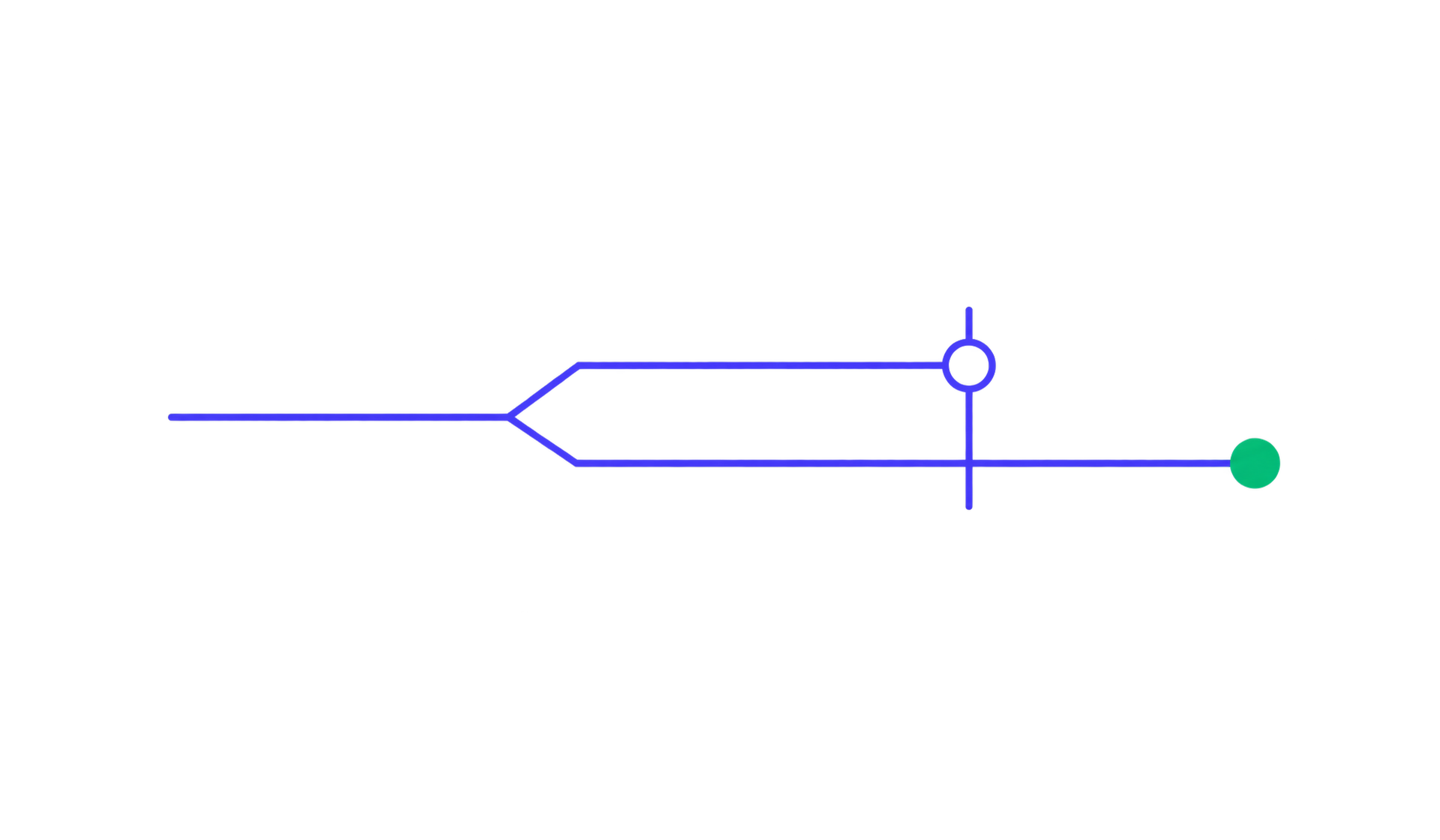
Two markets. One match. Different results.
Settlement is where AI models quietly get it wrong — and a wrong answer sounds exactly like a right one. So we built SharpBench, the world-first benchmark for exactly this.
Serving right now
Latency and uptime measured from real traffic, not a benchmark.

infersia/sports-2
infersia/sports-1

deepseek/deepseek-v4.1-flash
deepseek/deepseek-v4-flash-0731
deepseek/deepseek-v4-pro-0813

thinkingmachines/inkling-small

x-ai/grok-4.6

meta-models/muse-glimmer-30b

qwen/qwen3.6-35b-a3b
qwen/qwen3.8-27b
qwen/qwen3-8b
minimax/minimax-m3
z-ai/glm-5.3-flash
xiaomi/mimo-v2.5
Next up: zeroentropy/zerank-2, qwen/qwen3-30b-a3b-instruct-2507, google/gemma-4-26b-a4b-it, qwen/qwen3-235b-a22b, openai/gpt-oss-120b, meta-llama/llama-4-scout, qwen/qwen3-1.7b. We list what’s planned as clearly as what’s running.
The rest of your product runs here too
Sport is the part we have gone deepest on, not the only thing we serve. For everything else — support replies, content, classification, the internal tooling nobody markets — the reason to route it through us is what happens to the request after it arrives.
Your prompts are not stored
Not as policy — as construction. The usage table has no column a prompt could be written into, the logger reduces every object to an allowlist before formatting, and the proxy streams bytes through without ever assembling the text. The mechanism, in detail.
Your prompts are not trained on
We train on data we build and licence ourselves. Customer traffic is not a corpus, and it never becomes one by default. If we ever wanted a request for anything beyond serving it, that would be a thing you switched on knowingly — not a clause.
Debug logging is double-gated and expires
If you want your requests captured to debug them, it takes two things: the setting enabled on your organisation, and an explicit window that runs out on its own. Off is the default and off is what it returns to. There is no opt-out to miss.
Open weights, without a second policy layer
We serve the model, not a filtered version of it. Betting is a legal, regulated industry that general assistants routinely refuse to discuss in specifics — and a model that hedges on a settlement question is useless in a product built for one. Within our acceptable use policy, you get the model’s own behaviour.
Same account, same key, same base URL as the grounded endpoints. Nothing about your integration changes when you move between them.
Works with what you already use
We implement the OpenAI API surface exactly — request shapes, response shapes, streaming, error types and rate-limit headers. If a tool supports a custom OpenAI base URL, it supports us.
- openai-python & openai-node — Official SDKs, unmodified
- Cline, Continue, Aider — Point at our base URL
- LangChain, LlamaIndex, CrewAI — ChatOpenAI-compatible
- LiteLLM, OpenWebUI — Standard provider config
curl https://api.infersia.com/v1/chat/completions \
  -H "Authorization: Bearer $INFERSIA_API_KEY" \
  -H "Content-Type: application/json" \
  -d '{
    "model": "qwen/qwen3-8b",
    "messages": [{"role": "user", "content": "Hello"}],
    "stream": true
}'x-request-id: isr_01KYGHW7S1GTR2AVE40C
x-infersia-cost-usd: 0.000001950Every response tells you what it cost — to the nano-dollar.
Get 10% on your first top-up
Sign up, get a key, and point your existing code at a real endpoint. Your first top-up lands with 10% extra credit — $10 minimum, no subscription, no expiry.